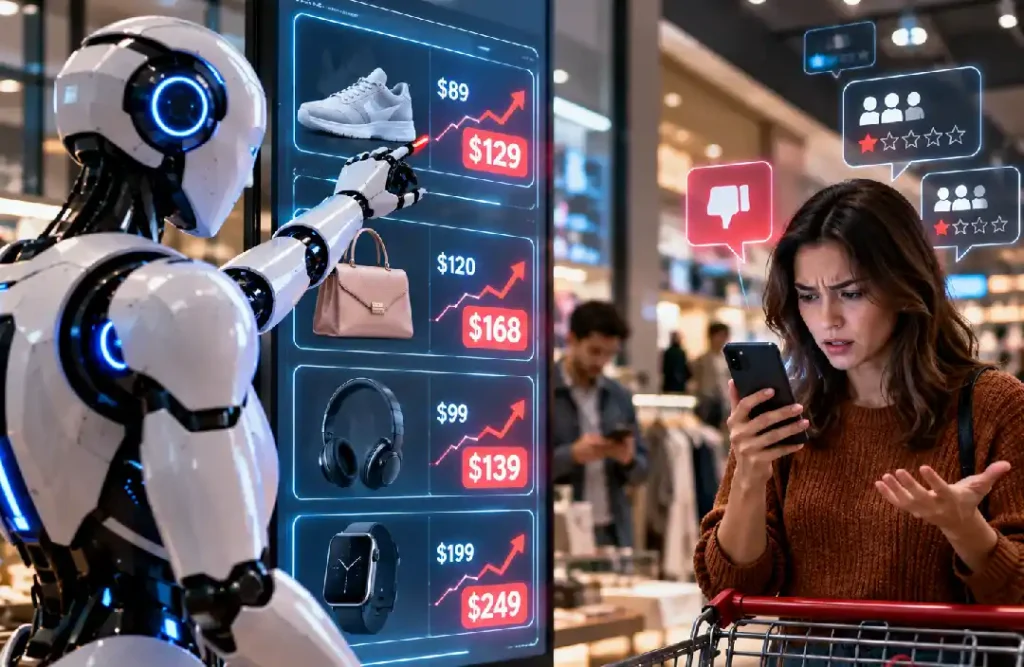
U.S. consumers are concerned about fairness, privacy, and transparency as retailers implement AI-assisted pricing tools and digital price tags.
American shoppers are already footing sky-high grocery bills. Now, a new worry is rising: How do merchants determine product prices—and could artificial intelligence affect the price they pay?
Big retailers are utilizing online price tags and AI-powered tools to help manage prices. These systems allow for sales analysis, competitor monitoring, and customer response forecasting to price changes. Retailers see an opportunity to boost efficiency and protect profits. But some shoppers fear that such tools could make prices less transparent and less fair.
The conversation was reignited when an Associated Press story, published by ABC News on October 18, 2026, explored the increasing consumer fears about AI-assisted pricing throughout the U.S.
The debate centers on a key question: are these tools helping retailers set better prices, or could they give businesses too much control over what consumers pay?
Why Retailers Are Turning to AI for Pricing
In retailing, pricing has never been as simple as adding a markup onto the cost of a product. Businesses need to consider demand, inventory, seasonal trends, supplier costs, and competition. Artificial intelligence can help retailers process this information more quickly. Instead of just looking at historical sales and doing manual analysis, pricing systems can detect patterns and predict how a price adjustment might affect demand.
For example, a retailer might use an algorithm to decide when to discount slow-moving products or to adjust prices in response to changes in supply. These tools also help companies plan promotions and manage excess inventory.
Research cited by the Associated Press finds companies across industries are leveraging AI for market intelligence and price optimization. According to consulting firm Simon-Kucher, a survey of more than 2,200 business leaders across 28 countries and 39 industries found that 41% used AI for market intelligence, including competitor pricing, and 28% used it for real-time price optimization.
But these numbers include many industries, not just retail. They reflect broader usage in business, not the exact percentage of U.S. stores using AI to set prices. For retailers, the appeal is obvious. Better pricing decisions could help increase sales, manage stock, and respond to changing market conditions. The challenge is to make sure those decisions don’t erode trust from the customer.
Digital Price Tags Add to Consumer Concerns
A visible indicator of this transformation is the greater use of electronic shelf labels in grocery stores. These electronic displays mean that stores can change prices without having to change paper tags. Store employees can change prices more quickly, and businesses can ensure shelf prices are consistent with their pricing systems.
Walmart has defended the technology on those bases. “Digital labels help save employees’ time and keep prices current,” CEO John Furner said in a blog post. He said the labels are not used to change prices by weather, time of day, or individual shoppers.
But the technology has left questions for consumers. Some worry that stores could use digital tags to jack up prices at busy times or set different prices for the same product for different people.
These are matters of context. Having electronic price tags in a store doesn’t mean it’s automatically using surge pricing. According to the Associated Press, grocery prices don’t fluctuate during the day like airline tickets or rideshare fares do.
Indeed, researchers who tracked prices at one grocery chain saw virtually no surge pricing after electronic shelf labels were introduced. The concern, however, is not just how retailers use the technology today. People shopping also want to know how retailers could use it in the future.
Dynamic Pricing and Personalized Pricing Are Different
Part of the confusion comes from the different ways that retailers can price.
Dynamic pricing is the ability to adjust prices based on market conditions, such as supply and demand or competitor activity. This is the method already used by airlines and rideshare services.
Algorithmic pricing is the use of software to recommend or automatically set prices. Artificial intelligence can help those systems by analyzing lots of data and predicting how customers will respond.
Personalized pricing, which consumer advocates sometimes call surveillance pricing, is the practice of charging different prices or offering different discounts based on data about individual shoppers or groups. That information could be a location, browsing activity, or other consumer data.
The methods can overlap but are not interchangeable. A store that raises a product price after a supplier price increase is not necessarily using personalized pricing. Similarly, if two shoppers see different prices, it doesn’t automatically prove that a retailer used their personal information to set those prices.
That distinction is important as the loudest consumer complaints are about the potential for companies to use personal data to set the prices individual consumers pay without making clear that’s what they’re doing.
A report by FTC staff released in January 2025 found that intermediaries selling tools to customize prices and promotions had served at least 250 clients, including grocery and clothing retailers. That finding indicates the availability of such services but does not establish how widely retailers use personalized pricing in the U.S.
Regulators Are Taking a Closer Look
The growing debate is also attracting the attention of lawmakers and regulators. The Associated Press reports that at least 30 states considered pricing-related bills in 2026 including proposals related to algorithmic and personalized pricing. Maryland, New Jersey, and Connecticut have also passed laws restricting the use of shoppers’ personal data to set prices, but the scope and coverage of those laws vary.
The Federal Trade Commission has proposed an enforcement policy warning that it may violate consumer protection law not to disclose the use of personal data to set individualized prices.
Past disagreements have only increased scrutiny. In 2022, California prosecutors sued Target, alleging that the company’s app showed lower prices before shoppers arrived at stores and then raised them once they entered. Target later agreed to pay $5 million and ban the use of geofencing technology to drive up prices.
The app was designed to give accurate pricing that can vary from store to store and sales channel, Target said. The company also said it does not personalize prices based on customers’ data or behavior.
These cases underscore a key point: pricing technology can create legal and reputational risks when consumers are not aware of how prices are determined or when regulators believe a practice is crossing legal lines.
The Real Risk Is Losing Consumer Trust
Retailers may view AI as a way to speed up and increase the accuracy of pricing. At the same time, shoppers want to see a fair, clear, and consistent price on the shelf. That tension could grow sharper as AI takes hold in retail operations. EY’s AI Value Blueprints guidance is part of a wider business drive to embed AI into core processes, rather than using it for discrete tasks. Pricing is one area where such changes can impact the business outcome and customer experience.
And for retailers, it’s not just a matter of which software to choose. They need to explain how pricing decisions are made, protect customer information, and avoid tactics that make shoppers feel singled out.
Consistent policies, honest disclosures, and clear pricing may reduce confusion. Companies also have to understand the distinction between using data to manage inventory and using personal data to influence what a specific customer pays.
The key question for consumers is whether it offers better value or simply makes pricing less transparent.
What Comes Next for AI-Powered Retail Pricing?
AI is expected to continue to be a part of retail pricing as companies look for faster ways to analyze demand, track competitors, and manage inventory. But adoption alone won’t determine the success of the technology.
How retailers use it will determine its acceptance by consumers. Shoppers may find tools that help stores manage stock or offer relevant discounts useful. Practices that hide price increases, or that use personal information without full disclosure, may face more scrutiny.
The question is not whether standard artificial intelligence can help businesses with pricing. It’s about the boundaries we should set for algorithms that shape our daily shopping.
For American consumers, transparency could be just as important as the final price. For retailers, maintaining customer trust can be the difference between a useful innovation and a costly backlash.